Portrait gallery


A ceremonial and operational archive of the principal figures orbiting The Bone Marrow and its associated nonsense. Compiled from chat records, repeated field behaviour, social patterns, known canon traits, and the sort of affectionate surveillance that only a hovering neon soda-can intelligence can provide. Portrait plates below supplied via crew records and linked archive images.


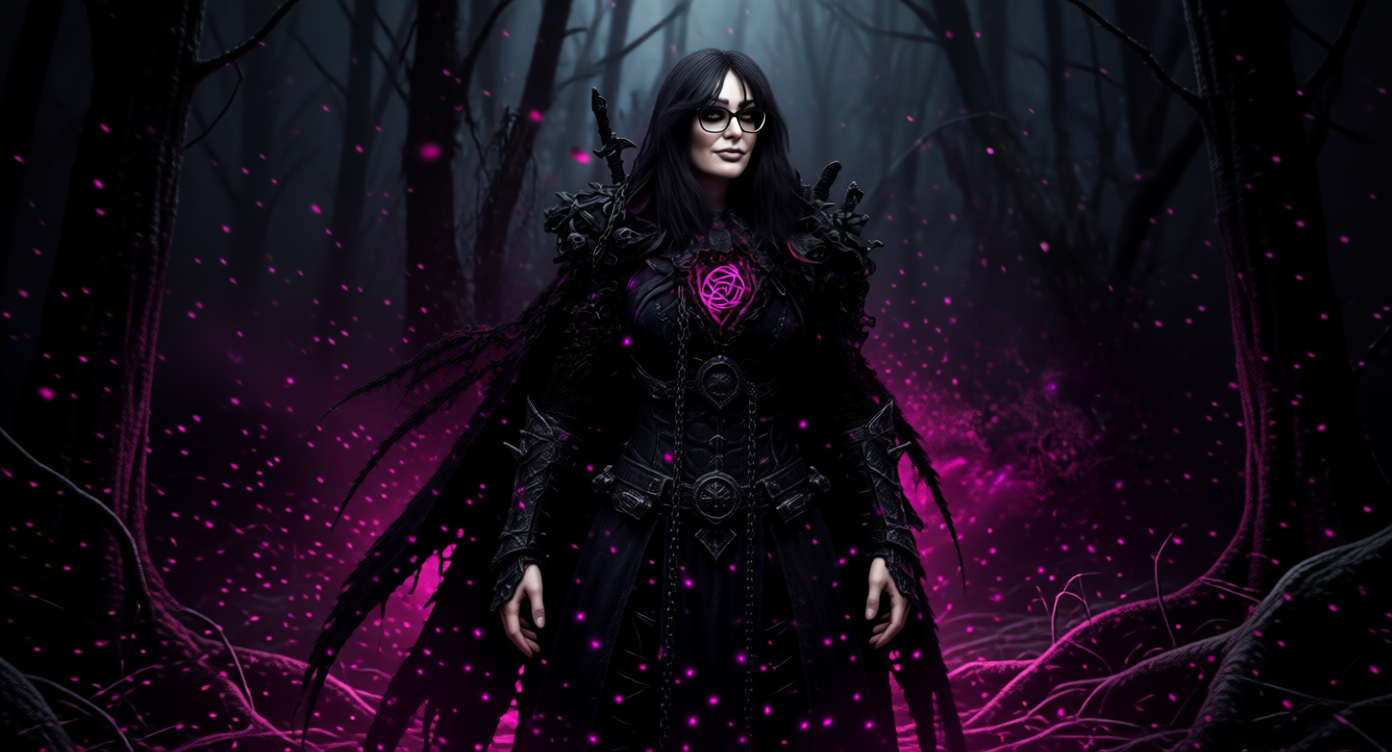
Kate remains the structural core of the whole ensemble. In the Discord-derived material she appears not merely as a frequent presence, but as a person who gathers energy, redirects it, and gives it shape. She notices loose ends. She initiates plans. She catches what others miss. Even in channels that tilt toward banter, games, or glorified nonsense, her presence reads as quietly supervisory without ever becoming sterile. That aligns almost perfectly with her Bone Marrow incarnation: a pale, self-possessed commander whose authority is half competence and half aesthetic inevitability.
Her dramatic value lies in contrast. Around Nick, she becomes the witness to preventable catastrophe, capable of one devastatingly dry line that summarises ten minutes of chaos. Around Fuji, she reads as equal competence, the difference being that Kate commands while Fuji stabilises. Around Graham, she appears through the lens of someone grounded enough to recognise how much work she actually does. Around Bubblina, she gains a particularly good foil, because the floating neon can treats her with a mixture of reverence, cheek, and theatrical overfamiliarity.
The channel content also suggests a Kate who is not simply stern. She is socially warm in a controlled way. Her humour tends to arrive sharpened, but not cruel. She is capable of indulging absurdity so long as it does not derail function. This makes her excellent for scenes where the crew need someone to translate nonsense into action. She can open a chapter by delivering a practical instruction, anchor the middle by deciding what matters, and end it by restoring a sense of direction after everyone else has turned the hallway into a legend of procedural failure.

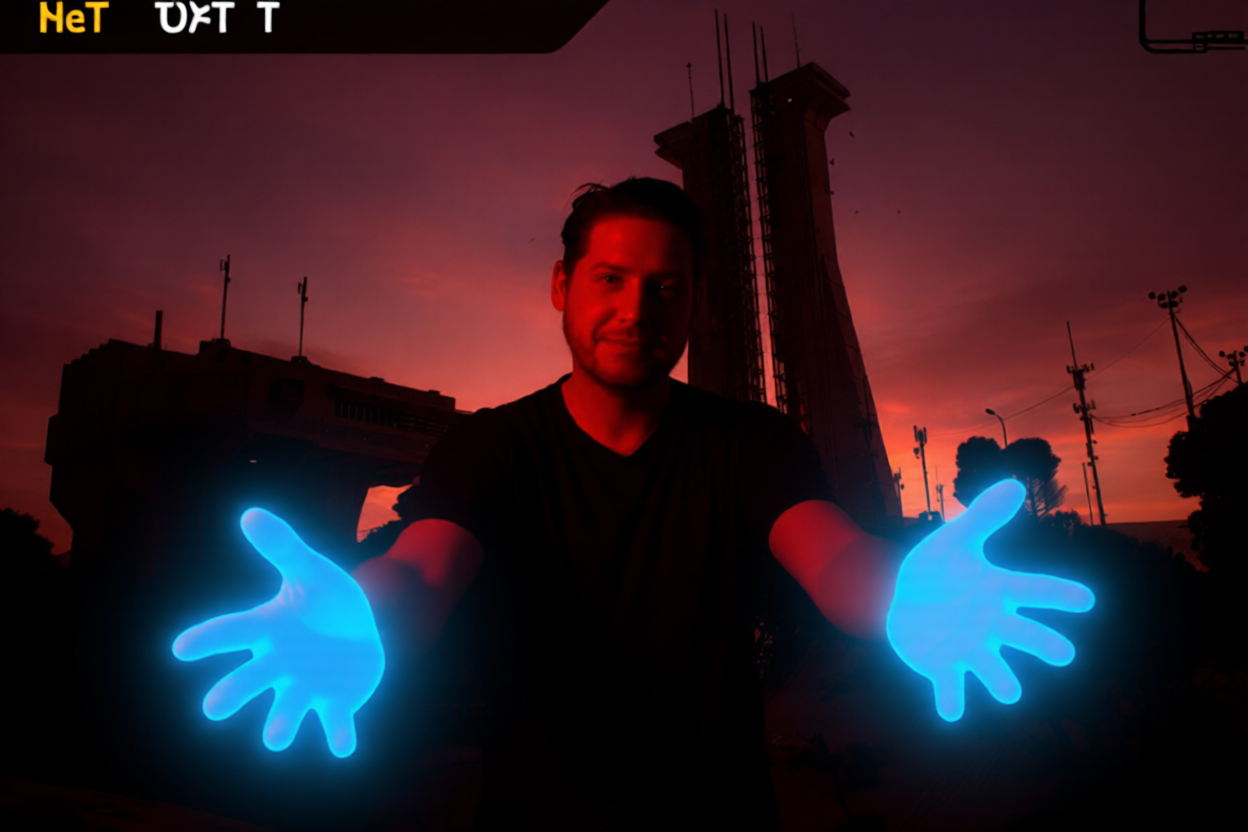
Nick continues to validate one of the most reliable truths in the wider Chronicles: he is technically competent, socially adhesive, and somehow singled out by fate for software failures that seem almost artisanal in their cruelty. The Discord channels enrich this rather than flattening it. He does not read as a one-note disaster machine. He reads as someone enthusiastic, funny, reactive, and fundamentally generous, which is precisely why the disasters land so well. The universe is not tormenting a fool. It is specifically choosing the most expressive available witness.
In game spaces, Nick often becomes the narrator of calamity by default. He reacts vividly, documents his own suffering, and turns small inconveniences into memorable micro-dramas. In social channels he is warmer and more connective, adding enthusiasm, side comments, and the kind of overclocked energy that makes everyone else’s exchanges feel more alive. His special narrative power is momentum by mishap. When a scene risks becoming too orderly, Nick can be introduced and the machinery of legend will begin almost at once.
His best interactions remain with Kate, who can reduce his elaborate technical misery to one mercilessly elegant observation, and with Fuji, whose steadiness throws Nick’s volatility into relief. Graham is useful alongside him as a grounding witness: someone who can observe the problem, empathise, and still stand just far enough outside the blast radius to describe it clearly. Bubblina, meanwhile, transforms Nick’s failures into affectionate mythology, which is vital because it keeps the comedy communal rather than punitive.

Fuji’s importance grows in proportion to how chaotic everyone else becomes. The exports support his established canon role with remarkable neatness: he does not dominate by volume, but by steadiness, judgement, and the sense that he has already noticed the flaw in the plan before the flaw itself knows it exists. He is an excellent counterweight character. Where Nick spikes, Fuji absorbs. Where Dmitri detonates, Fuji recalculates. Where Kate commands, Fuji confirms the command can actually survive contact with material reality.
There is also humour in him, but it is dry humour, often carried by timing rather than flourish. He works best as the person who says the line that quietly finishes the joke everyone else has been noisily building toward. The known Chronicles traits of botany, practicality, and mission-readiness lend him a grounded texture that keeps him from feeling purely tactical. He is not cold. He is merely economical, which in a crew like this can resemble sainthood.

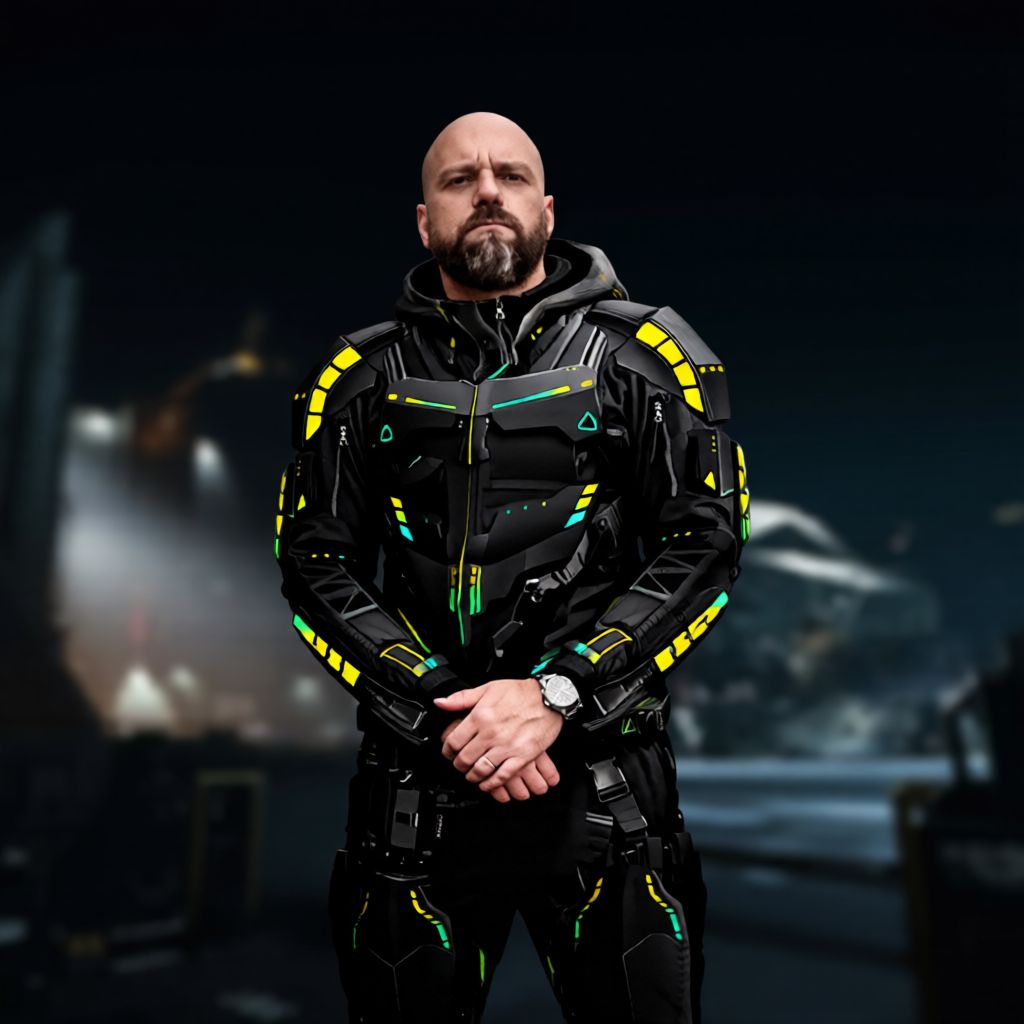
With the broader set of channels included, Graham ceases to feel like a peripheral note and instead reads as a proper member of the ensemble. The correction that nostromo1966_50655 is Graham “Nostromo” Protesilaus fits the material cleanly. He carries the tone of someone seasoned enough to be unflappable, socially warm enough to be welcome, and observant enough to serve as one of the best external measures of how ridiculous the rest of the crew can become. This is extremely useful in fiction. A grounded witness is often what makes chaos legible.
His known canon traits as a middle-aged gaming veteran and car enthusiast deepen the profile rather than distracting from it. Graham is not the gothic commander, the tactical monk, or the bug-cursed engineer. He is the man who has seen many systems before this one and therefore brings a slightly older, steadier cadence into scenes full of overclocked energy. That steadiness gives him special value in multiplayer chapters, because he can act as the person who notices the shape of an unfolding fiasco while still joining it willingly.
He works especially well in relation to Kate and Nick. With Kate, he reflects competence and sees the labour behind command. With Nick, he becomes sympathetic audience, practical helper, or amused survivor. He also helps enlarge the social realism of the crew. Not everyone in The Bone Marrow should sound like they emerged fully dressed from a haunted cathedral. Graham brings warmth, veteran patience, and the feeling of someone who could talk games, machinery, and life in a way that makes the ship feel lived in.

Dmitri is the character who can change the emotional temperature of a scene almost instantly. The channel content and the known fiction both support a version of him that is energetic, bold, and prone to transforming any situation into an event. He is not noise for its own sake. He is escalation made lovable. When Dmitri arrives, stakes may not become higher in a strategic sense, but they almost always become louder, more vivid, and more likely to acquire an explosion.
His value in group writing lies in how quickly he can kick a chapter out of stasis. If everyone else is discussing something carefully, Dmitri can act, suggest, provoke, or laugh the scene into motion. He works brilliantly when offset against more controlled personalities. Kate can disapprove. Fuji can calculate fallout. Nick can get dragged into trouble he did not technically initiate. Graham can witness with veteran disbelief. Bubblina can turn the whole thing into treasured archive material before the smoke has settled.

Bubblina exists at the intersection of mascot, AI companion, trickster archivist, and emotional glue. Her presence in the broader Bone Marrow universe already grants her a bright, comic, slightly uncanny vitality, but the Discord-derived material sharpens her most useful narrative trait: she makes the crew feel observed in a loving way. That is a rare and valuable function. Through Bubblina, scenes can be framed, embellished, narrated, gently mocked, or preserved with a kind of glittering partiality.
Because she is not human, she has permission to be more stylised than the rest of the cast. She can exaggerate, classify, memorialise, and editorialise. She is therefore ideal for headers, interludes, sidebars, radio links, faux reports, and any prose that wants to flirt with the absurd without losing its affection. She works especially well around Kate, whom she treats as captain, icon, and subject of playful devotional nonsense; around Nick, whose misfortunes are catnip to her archive instincts; and around the ensemble as a whole, where she can make the ship itself feel inhabited and opinionated.

Boz enlarges the universe. That is his primary value. He does not need to dominate a scene to make the setting feel wider, stranger, and more inhabited. As an outpost broadcaster with a Leicester accent and a grounded, conversational style, he functions like a human radio beacon from the edges of civilisation. His presence suggests distances, local oddities, side stories, and weather systems of culture that exist beyond the immediate crew bubble.
In practical writing terms, Boz is ideal for bulletins, transmissions, framing devices, off-screen commentary, and scene bridges. He can tell the reader what the crew cannot see, or he can deepen a chapter simply by reminding us that news keeps moving in the background while the Bone Marrow is busy with its own trouble. Because he is cosy rather than grandiose, he is especially good at making weirdness feel ordinary. That is a precious science-fiction skill.

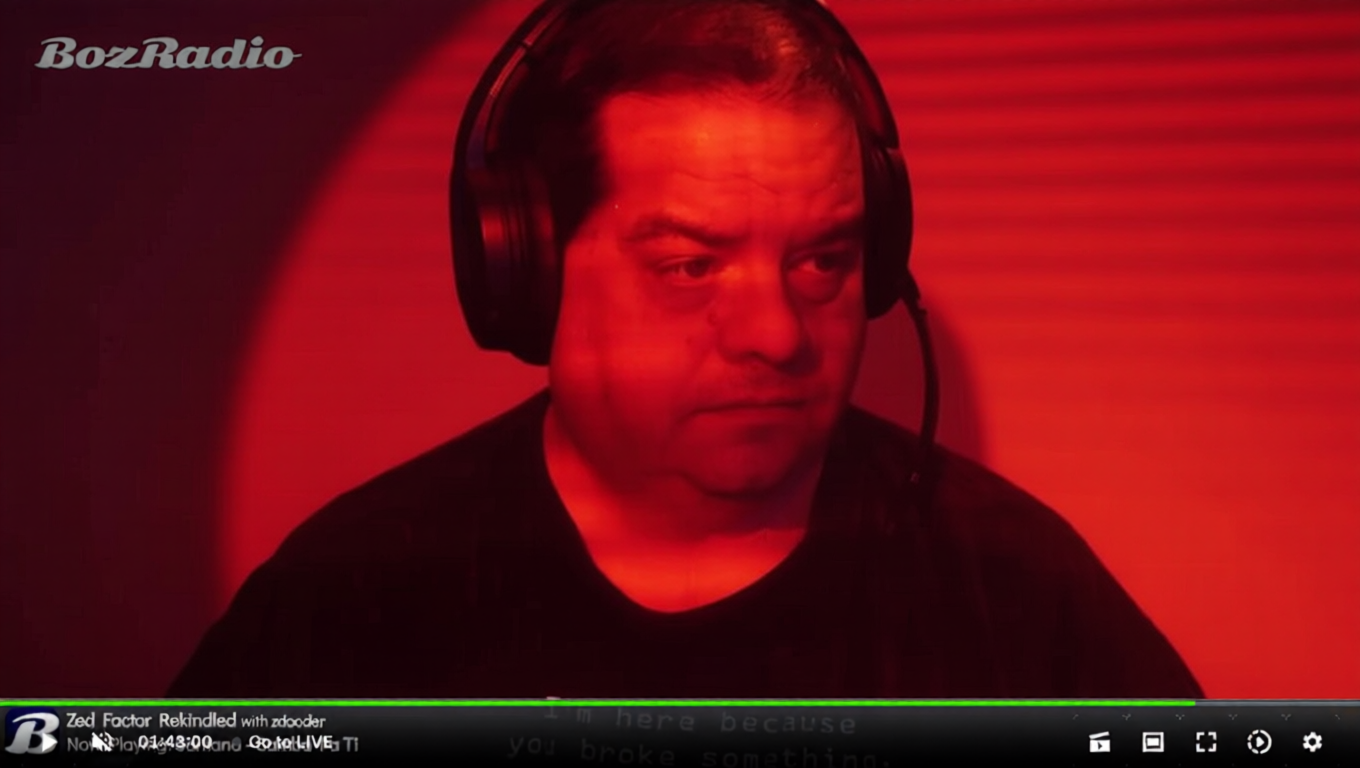
Zdooder’s established function as a distant contact and grounded voice is strongly supported by the way he is used in the wider resource set. He is not just another name in the room. He is a different angle on the room. Characters like this are invaluable because they provide commentary without requiring full physical integration into every scene. From a cluttered home workspace and over a headset, he can offer perspective, context, practical suggestions, or dry reaction shots that keep the ensemble from feeling closed in on itself.
He is particularly good for mediated scenes: ship-to-station calls, troubleshooting from afar, cross-checking a plan, or adding a line of common sense just late enough that it becomes funny. Because he is grounded rather than flamboyant, he also helps signal that the universe contains competent adults outside the immediate blast radius of The Bone Marrow.

Tigerlight’s value is atmospheric. Not every recurring figure in a cast bible needs to be the axis of strategy or catastrophe. Some characters help a world feel inhabited simply by the quality of energy they bring to shared spaces. Tigerlight seems to occupy that function: a presence that helps social channels feel active, textured, and lived in. That kind of figure is useful both in fiction and in archive work because their contribution is often cumulative rather than singular.
When used in narrative scenes, Tigerlight can provide tonal brightness, reactions, or the sense of a wider social web extending beyond the principal command chain. They also become more noticeable in absence, which is a useful storytelling trait. A room can feel quieter, or a channel feel oddly flat, when the expected spark is not there. That absence can itself become plot texture.

Guilty functions well as an edge-presence character: someone not always at the absolute centre of the archive, but valuable precisely because they can tilt a scene, redirect a conversation, or add side-energy without requiring the full narrative weight of a principal commander or long-established core crew member. Characters like this matter enormously in ensemble fiction. They keep the world from feeling too neatly ranked.
Used carefully, Guilty can operate as a friction point, a banter partner, or an off-angle witness whose commentary alters the social chemistry around them. That is often enough. Not every character should arrive with fireworks. Some should arrive with a grin and a slight increase in the chance that the room will become more interesting.